
When it comes to kitchen design, there’s no shortage of opinions.
What colour cabinets to go for, whether to choose quartz or granite, handleless or shaker – the list goes on. But when the conversation turns to extraction, things often go a little quieter.
And when ceiling hoods enter the discussion? Even more so.
They’ve become something of a misunderstood feature in modern kitchens. Some people swear by them, others steer well clear, and a few brands have quietly stepped away from them altogether. But the reality sits somewhere in the middle – and it’s worth understanding properly.
Because when they’re done right, ceiling hoods can completely transform a space.
DESIGNED FOR THE WAY WE LIVE…
Modern kitchens aren’t what they used to be.
They’re open, social, and designed to flow into the rest of the home. Cooking no longer happens in isolation – it’s part of the conversation, part of the atmosphere. And with that shift has come a demand for cleaner sightlines and less visual clutter.
Traditional extractor hoods, particularly larger statement designs, can interrupt that flow. They draw the eye, break up the space, and in some cases, feel at odds with an otherwise minimal design.
Ceiling hoods take a completely different approach.
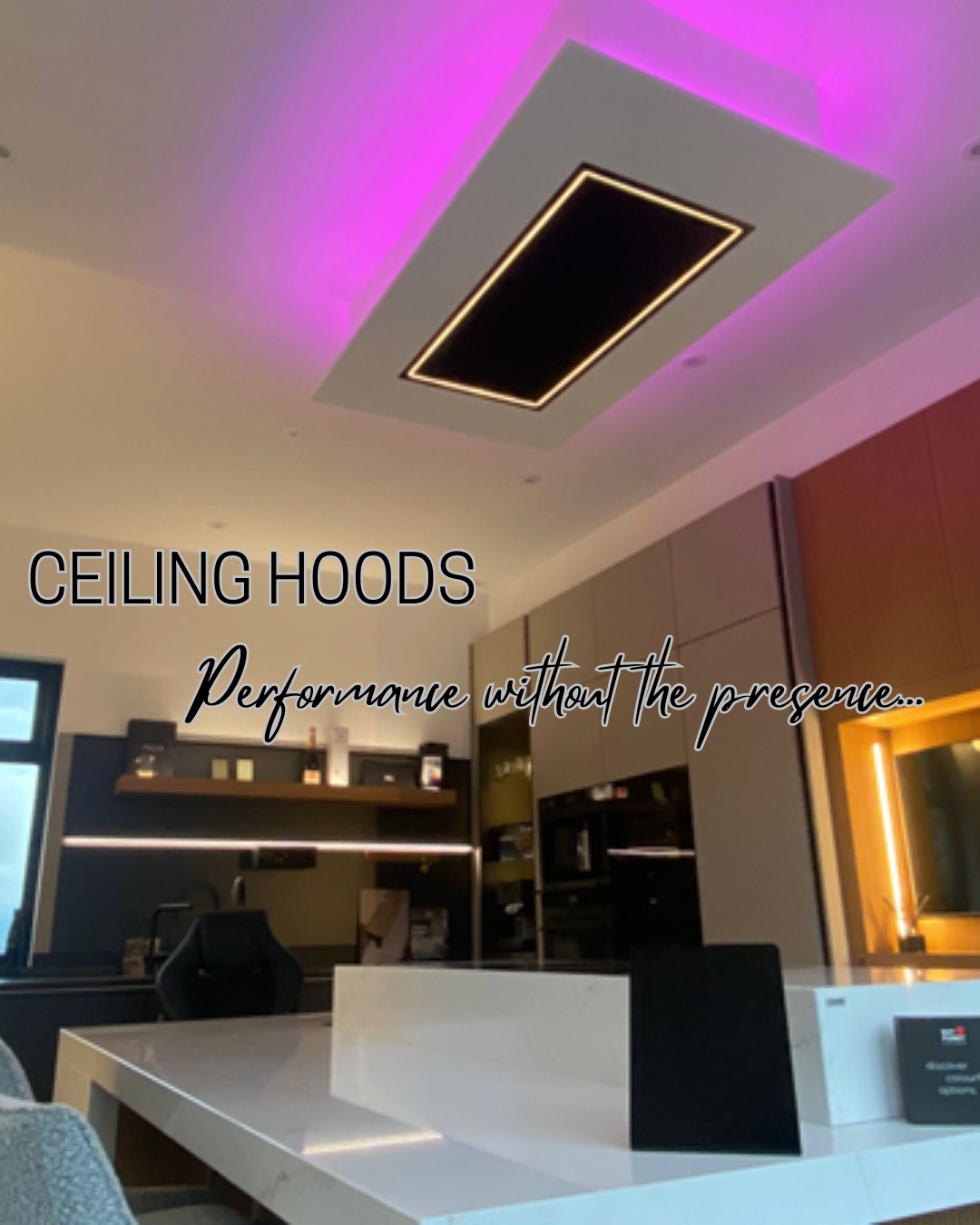
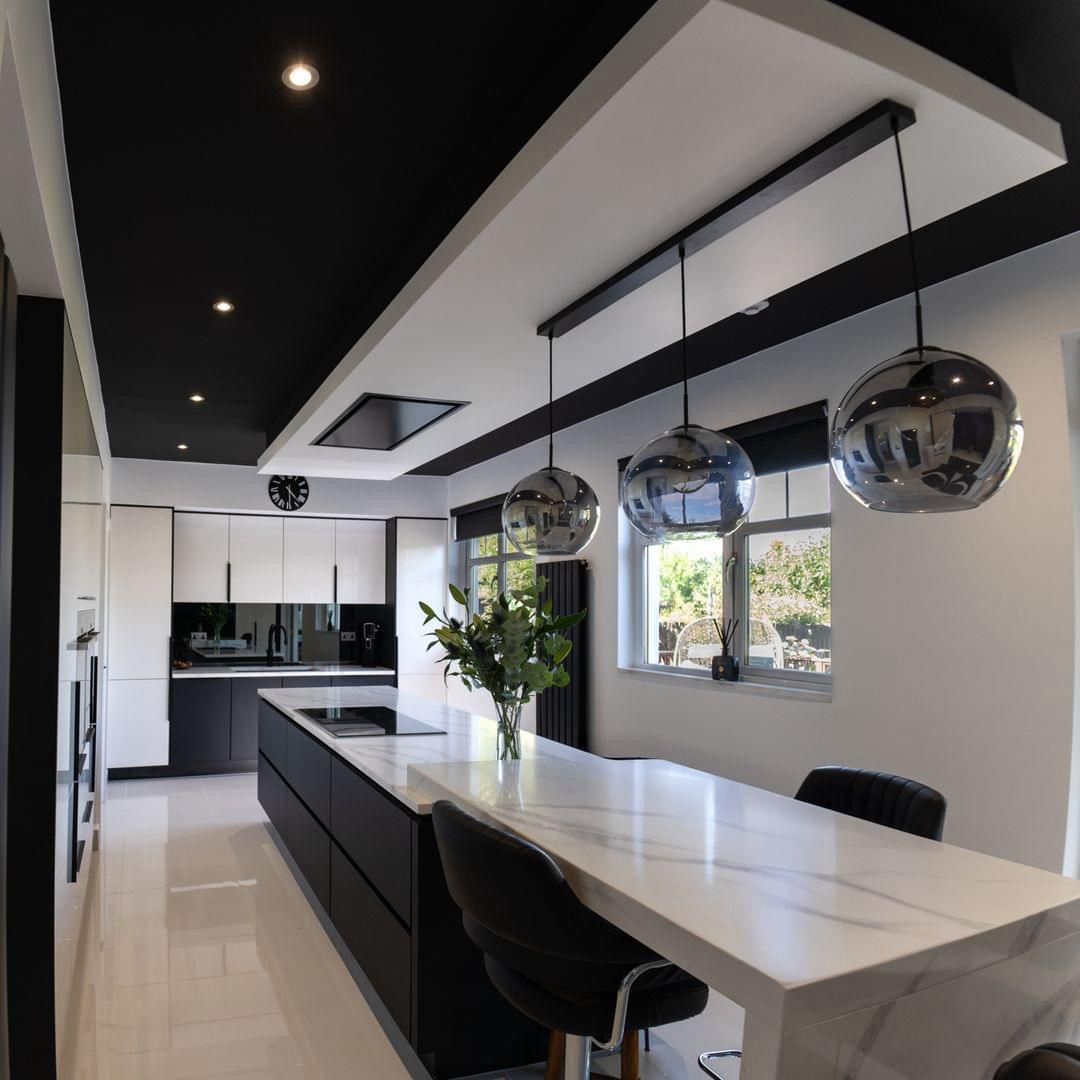
By sitting flush within the ceiling, they allow the kitchen to remain visually uninterrupted. No bulk, no obstruction – just clean, open space. It’s a subtle change, but one that makes a noticeable difference, especially in island-led layouts where the view across the room really matters.
SO WHY THE MIXED REPUTATION?
If ceiling hoods look this good, why aren’t they everywhere?
It largely comes down to perception – and in some cases, poor execution.
Because they sit further away from the hob, ceiling hoods have often been questioned when it comes to performance. In reality, it’s not that they can’t perform – it’s that they need to be specified correctly for the space. Ceiling height, cooking habits, and extraction power all play a role.
Then there’s installation. They require a bit more planning than a standard wall-mounted hood, particularly when it comes to ceiling space and ducting. For some, that’s enough to rule them out early on.
But for the right kitchen, these aren’t drawbacks – they’re just considerations. And when factored in properly, the results speak for themselves.
PERFORMANCE WITHOUT THE PRESENCE…
The latest generation of ceiling hoods has come a long way, combining discreet design with serious performance.
Take something like the Nitro 360. Clean, minimal, and designed to blend seamlessly into the ceiling, it features a powerful German motor that delivers strong extraction while maintaining impressively low noise levels. The 360° motor design ensures effective airflow from all angles, making it particularly well suited to island cooking.
Lighting also plays a bigger role than many expect. With adjustable LED lighting that can be tailored from warm to cool tones, it’s not just about visibility – it’s about creating the right atmosphere in the space, day to night.
For something a little more design-led, the Sense 360 offers a more striking visual approach. With its illuminated perimeter panel, it becomes a feature in its own right – subtle, but impactful. It still maintains that slim 198mm profile, but adds a layer of personality that works beautifully in contemporary kitchens where lighting is part of the overall design story.
And for projects where installation flexibility is key, options like the Slimline ceiling hood make things even more accessible. Designed to fit between or across joists, it removes the need for bulky ceiling alterations or dropped bulkheads, opening up the possibility of ceiling extraction in spaces where it might not have been considered before.
NOT FOR EVERY KITCHEN – AND THAT’S THE POINT!
Ceiling hoods aren’t a one-size-fits-all solution.
In smaller kitchens, or where ceiling height is limited, other forms of extraction may be more appropriate. Likewise, for particularly heavy-duty cooking, alternative solutions might be better suited.
But that doesn’t make ceiling hoods a compromise; it just means they’re a more considered choice.
In the right setting, they offer something that few other extraction methods can: performance without presence. They allow the design to lead, while quietly doing the job in the background.
Perhaps the biggest shift needed is simply how we think about extraction in the first place.
Rather than treating it as an afterthought, it should be part of the design conversation from the very beginning. Because the way your kitchen looks is only half the story – how it feels to live in matters just as much.
Ceiling hoods challenge the traditional idea of what extraction should look like. They’re not bold or attention-seeking. They don’t dominate the space. Instead, they offer a quieter, more refined approach – one that fits perfectly with the way modern kitchens are evolving.
Misunderstood? Maybe.
But increasingly, they’re becoming one of the most interesting -and considered – choices in contemporary kitchen design.
PRODUCT LINKS:
CEILING HOODS: Ceiling – Miro Products | Premium Extractor Hoods
AERO: Aero – Miro Products | Premium Extractor Hoods
NITRO 360: Nitro 360 – Miro Products | Premium Extractor Hoods
SENSE 360: Sense 360 – Miro Products | Premium Extractor Hoods
SLIMLINE: Slimline – Miro Products | Premium Extractor Hoods