
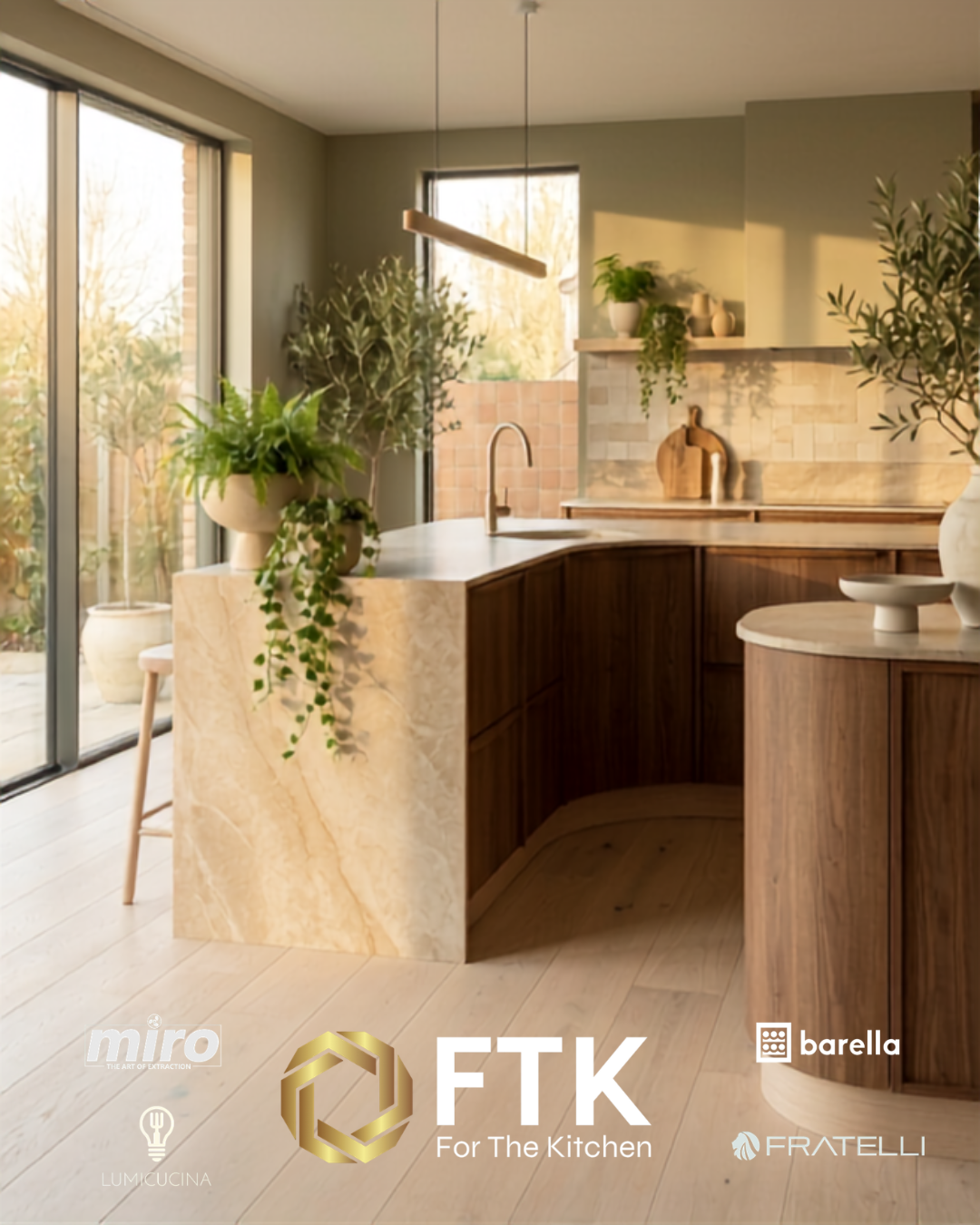
YOUR KITCHEN, CONNECTING WITH NATURE
For years, kitchen trends have focused on aesthetics. Colours, finishes, layouts and statement features have often dominated the conversation. But increasingly, homeowners are looking for something more than simply a beautiful space.
They want a kitchen that feels good to spend time in.
Enter biophilic design.
Whilst the term may sound unfamiliar, the concept is surprisingly simple. Biophilic design is centred around strengthening our connection with nature by incorporating natural materials, daylight, organic shapes and calming colours into the spaces we use every day.
And nowhere is that more relevant than the kitchen.
As the true heart of the home, the kitchen has evolved far beyond a place to prepare meals. It’s where we gather, entertain, work, socialise and unwind. It’s little surprise then that many homeowners are embracing designs that help create a sense of calm, balance and wellbeing.
Natural timbers such as oak, walnut and ash continue to grow in popularity, bringing warmth and character into modern kitchens. Paired with natural stone surfaces, textured finishes and earthy colour palettes, these materials help create a space that feels grounded and welcoming rather than cold and clinical.
We’re also seeing a move towards softer, more organic forms. Curved islands, rounded worktop edges and flowing design lines help soften the overall appearance of the kitchen, creating spaces that feel more relaxed and inviting. Combined with an abundance of natural daylight, the result is a kitchen that feels brighter, calmer and more connected to the outdoors.
Of course, biophilic design isn’t just about how a kitchen looks. It’s about how it feels.
A clutter-free environment, thoughtful lighting and clean air all play an important role in creating a healthier living space. As homes continue to embrace open-plan living, factors such as air quality and effective extraction are becoming increasingly important considerations. After all, if the aim is to create a calm, welcoming environment, managing cooking odours, moisture and airborne particles should be part of the conversation too.
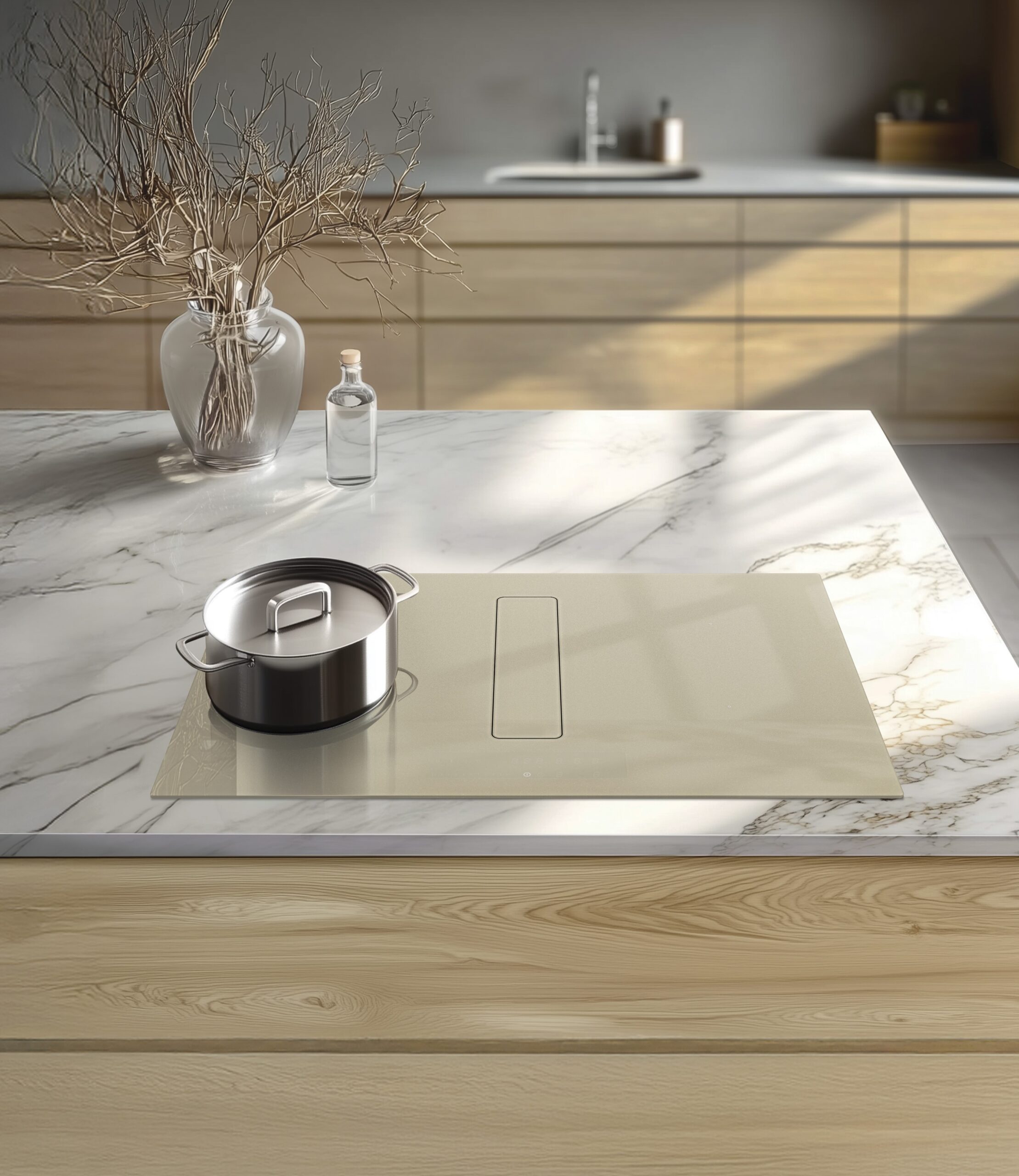
Technology is also evolving to support this more considered approach to design. Products such as venting hobs allow extraction to be integrated directly into the cooking surface, helping maintain clean sightlines and uninterrupted design. Sophisticated finishes, such as Champagne Gold, complement the warmer tones commonly found in biophilic interiors, proving that functionality and aesthetics can work hand in hand.
Perhaps that’s why biophilic kitchens continue to resonate with so many homeowners. They aren’t designed to follow a passing trend or make a bold statement. Instead, they’re created to improve everyday living.
In a world that often feels busy, noisy and increasingly connected, there’s something refreshing about bringing a little more nature into the spaces where we spend the most time.
And for many, the kitchen is the perfect place to start.