

A practical guide to choosing the right kitchen extraction solution for your customer.
Choosing extraction isn’t always as simple as finding a hood that looks right above the hob.
For kitchen designers and showrooms, the extraction decision often comes down to much more than aesthetics. The layout of the kitchen, the position of the hob, available ducting routes, ceiling construction, cooking habits and even the customer’s priorities can all influence which solution makes sense.
And with venting hobs, canopy hoods, ceiling hoods and island extraction all offering very different approaches, which one should you be specifying?
Here’s where to start.
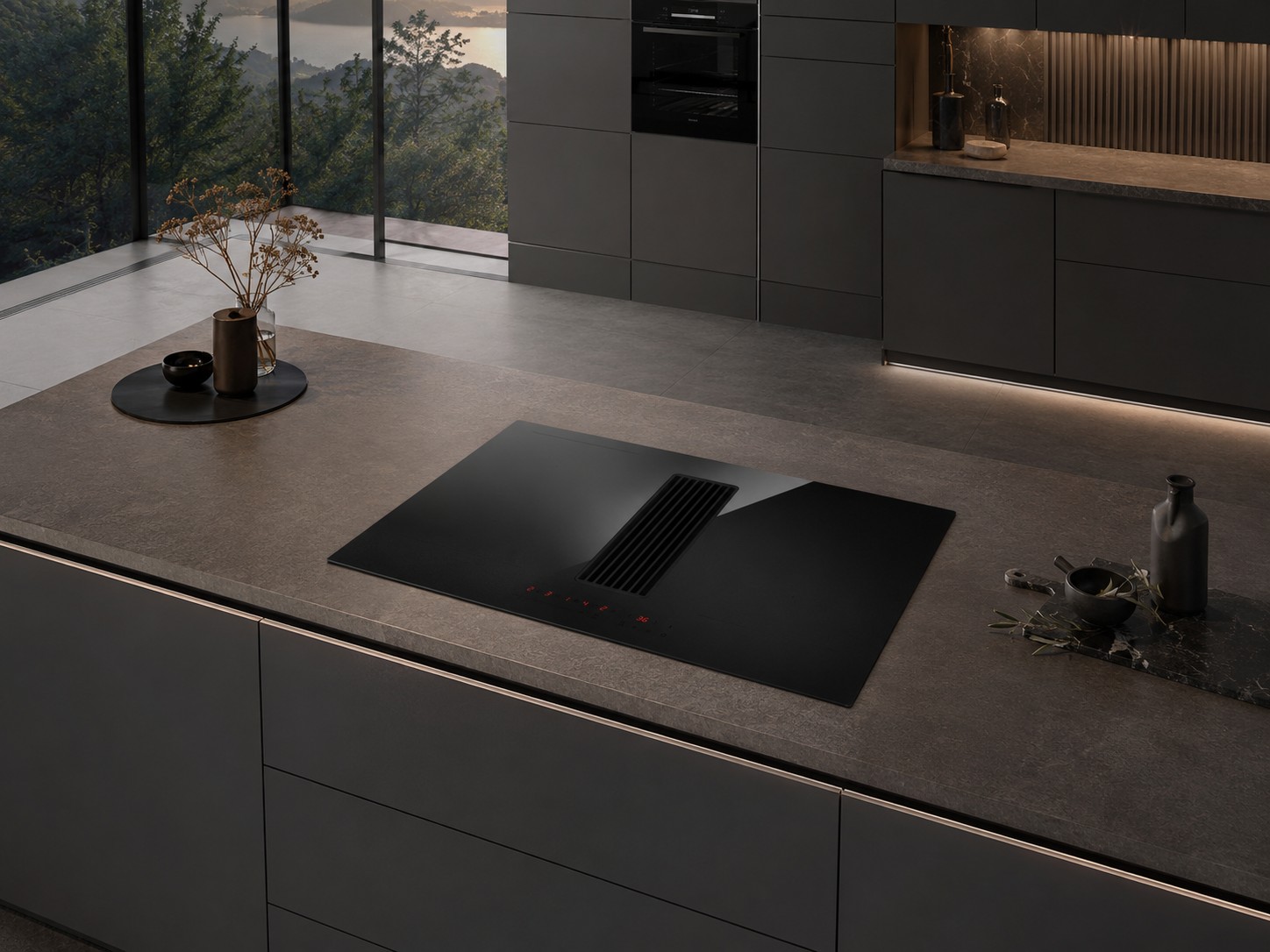
Is a venting hob the right solution?
Sometimes the best hood is no hood at all.
Venting hobs have become an increasingly popular option for kitchens where maintaining clean sightlines is important – particularly islands and open-plan spaces where a traditional overhead extractor could interrupt the design.
With extraction built directly into the hob, the cooking area and extraction system become one.
Consider a venting hob when:
- Your customer wants a clean, uncluttered island
- There is no obvious position for an overhead hood
- Maintaining sightlines across an open-plan space is important
- The customer likes the idea of integrated extraction
- The kitchen design doesn’t lend itself to a traditional canopy or island hood
Miro’s 2027 collection includes the Spectre, Onyx and Amadeus giving designers several different approaches to integrated extraction.
The important bit?
Don’t wait until the end of the design process to consider a venting hob. The extraction solution can influence the worktop, cabinetry, electrical requirements and ducting route, so it’s worth considering alongside the hob from the outset.
https://miroproducts.co.uk/product-category/venting-hobs-downdrafts/
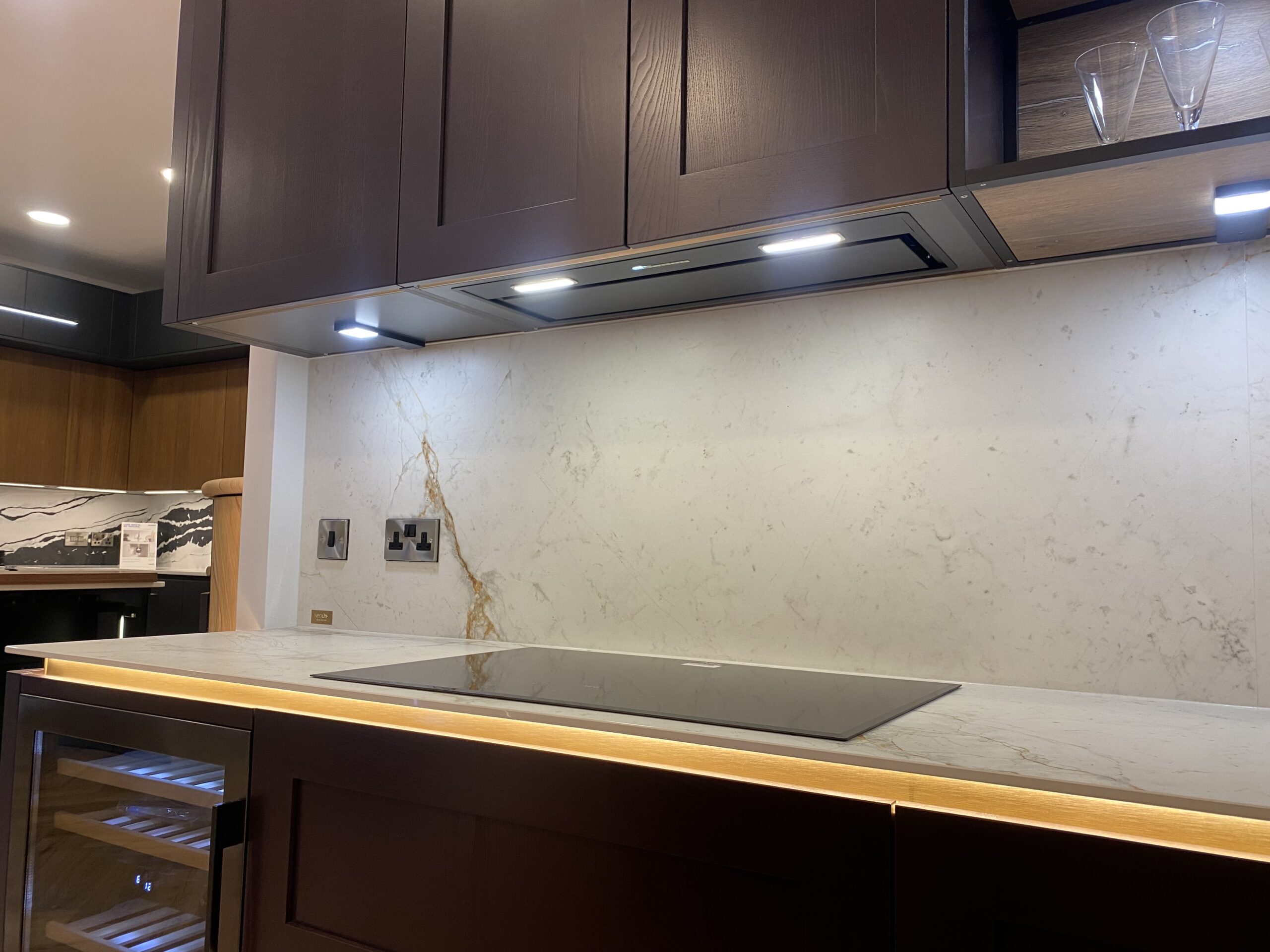
Is a venting hob the right solution?
Sometimes the best hood is no hood at all.
Venting hobs have become an increasingly popular option for kitchens where maintaining clean sightlines is important – particularly islands and open-plan spaces where a traditional overhead extractor could interrupt the design.
With extraction built directly into the hob, the cooking area and extraction system become one.
Consider a venting hob when:
- Your customer wants a clean, uncluttered island
- There is no obvious position for an overhead hood
- Maintaining sightlines across an open-plan space is important
- The customer likes the idea of integrated extraction
- The kitchen design doesn’t lend itself to a traditional canopy or island hood
Miro’s 2027 collection includes the Spectre, Onyx and Amadeus giving designers several different approaches to integrated extraction.
The important bit?
Don’t wait until the end of the design process to consider a venting hob. The extraction solution can influence the worktop, cabinetry, electrical requirements and ducting route, so it’s worth considering alongside the hob from the outset.
https://miroproducts.co.uk/product-category/canopy
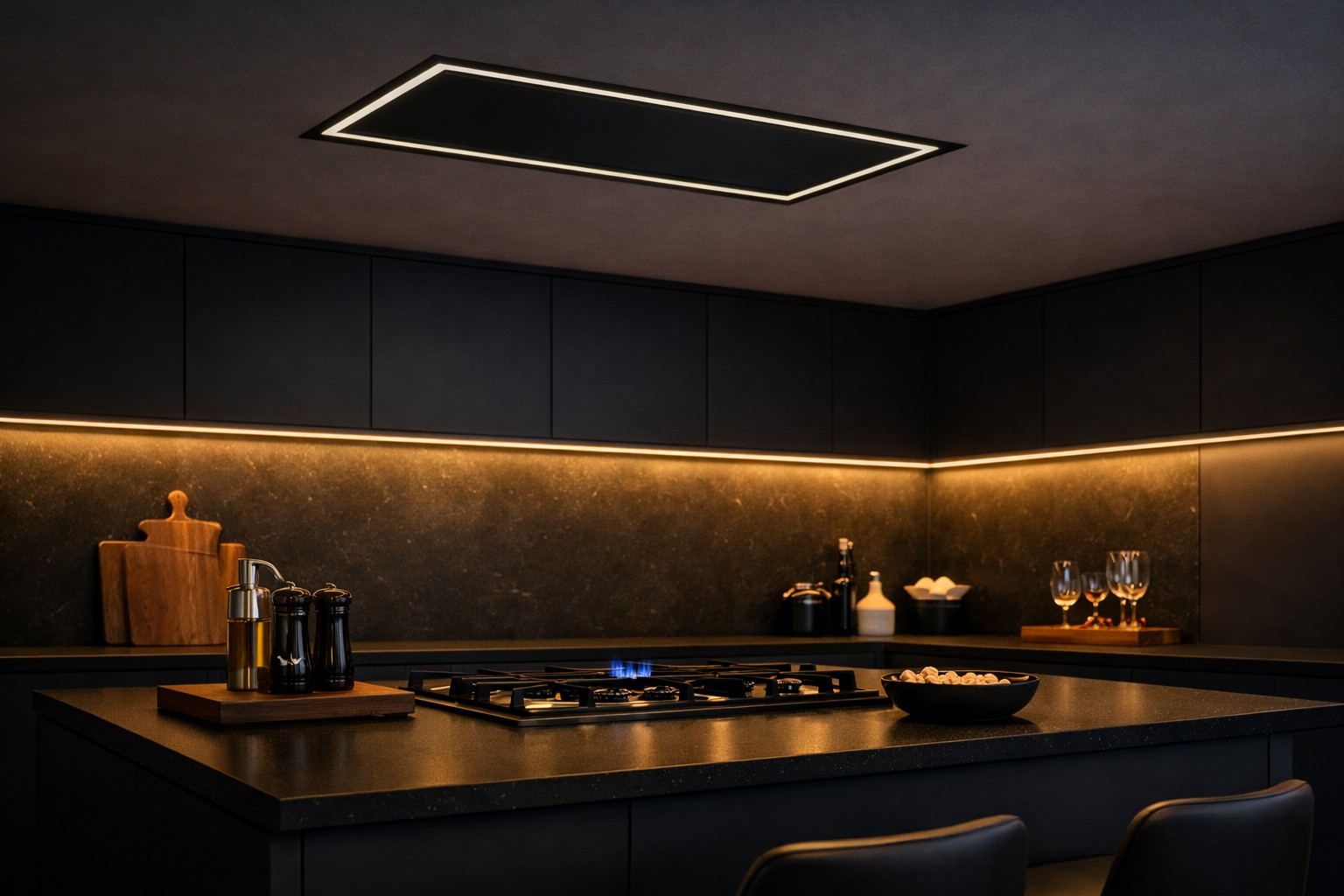
What about a ceiling hood?
This is where things get a little more interesting.
Ceiling extraction can be a particularly useful option when your customer wants the benefits of overhead extraction without a conventional hood hanging above the cooking area. It’s particularly suited to islands and open-plan kitchens where keeping the space visually open is important.
Miro’s ceiling collection includes solutions such as Legacy and Nebula, alongside established models including Slimline, Aero Compact, Raffaello, Verdi and Tintoretto.
But ceiling extraction isn’t simply a case of choosing a model and cutting a hole in the ceiling.
Before specifying, consider:
What’s above the ceiling?
Joists, services and available void space can all affect installation.
Where is the ducting going?
The shortest and most straightforward route isn’t always possible — particularly in extensions, renovations or rooms where the kitchen wasn’t originally designed around extraction.
How much space is available?
Some ceiling solutions can work particularly well where conventional bulkheads or dropped ceilings aren’t desirable.
That’s why it’s worth considering the extraction route before the kitchen is fully designed, rather than trying to solve it once the cabinetry is already on order.
https://miroproducts.co.uk/product-category/ceiling/
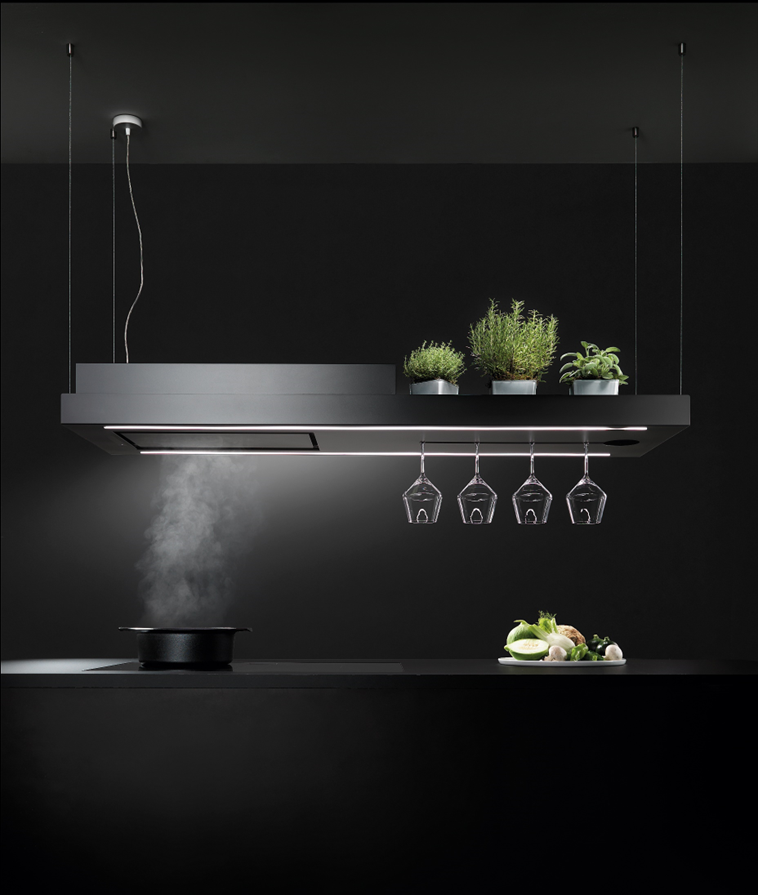
Does the customer want the extractor to make a statement?
Then don’t hide it.
In some kitchens, the extractor is an important part of the design rather than something to disappear into it. Island hoods can become a genuine architectural feature, particularly above large islands where the extraction solution helps define the cooking zone.
Miro’s Elysium, Tiziano and Utopia are designed for exactly this kind of application.
Consider an island hood when:
- The hob is positioned on a kitchen island
- The extractor can become part of the overall design
- The customer wants a more traditional overhead extraction solution
- There is sufficient ceiling height and space for installation
- The hood can be used as a visual feature rather than concealed
The key is to treat the extractor as part of the kitchen design – not just an appliance that gets added afterwards.
https://miroproducts.co.uk/product-category/island-hoods/
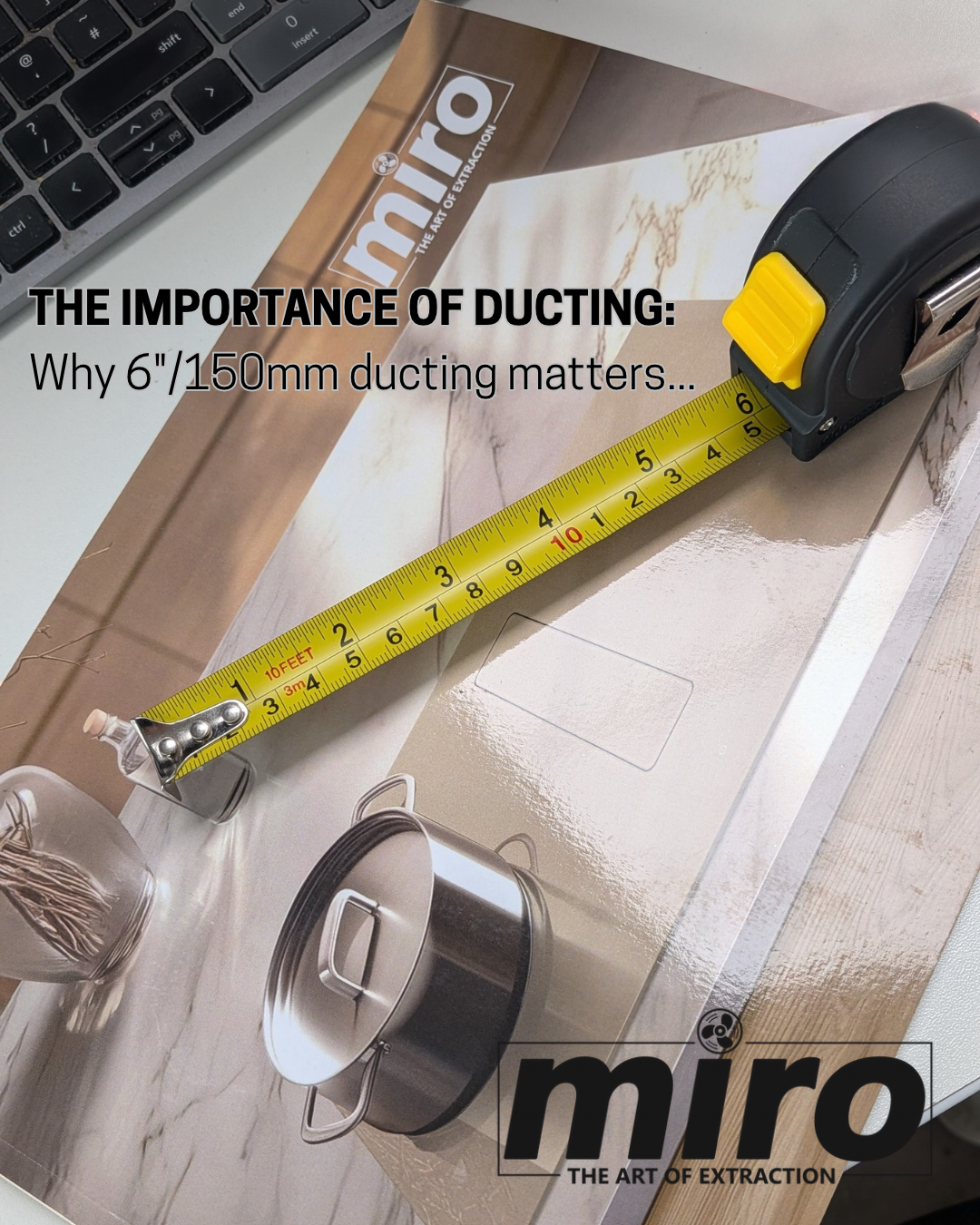
And then there’s the bit nobody wants to think about…
Ducting.
We know. It’s not the glamorous part of kitchen design, but it can make a huge difference to how well an extraction system performs.
The route, diameter, length and number of bends in the ducting system can all affect the finished installation. That’s why extraction needs to be considered at planning stage, rather than once everything else has been decided.
A beautiful kitchen with an underperforming extractor isn’t a particularly successful project.
And if the customer is expecting powerful extraction with minimal noise, the ducting specification becomes even more important.
Our advice?
Think about the extraction route before the kitchen is finalised. It could save you a headache later.
However, we appreciate that not every project gives you a straightforward route outside. Renovations, apartments, structural limitations and certain open-plan layouts can all make external ducting more complicated.
That’s where filtration becomes part of the conversation.
Miro offers both carbon and plasma filtration options, providing alternatives where recirculation is required or where the installation demands a different approach.
The important thing is to establish this early.
Don’t design the kitchen first and ask how you’re going to extract it afterwards.
https://miroproducts.co.uk/why-ducting-is-so-important/
https://miroproducts.co.uk/plasma-filters-what-are-they-and-are-they-worth-the-investment/